Every May, it starts. The coding camp emails. The reading challenge sign-ups. The neighbor who already registered her kids for three different enrichment programs. And somewhere underneath all of it, a quiet, nagging feeling that if you don’t get ahead of summer now, you’re already behind.
If that soundGras familiar, you’re not alone. Parents across the country feel the same pressure every year. Summer break for kids has somehow transformed from a season of freedom into a logistical project with deliverables. And the cost of that shift is something most families don’t notice until it’s already happened.
The Problem With the Perfect Summer
The to-do list approach to summer feels productive. It feels responsible. But what decades of research in child development consistently show is that the most important things happening in your child’s brain and heart don’t show up on any enrichment program’s outcomes report.
Unstructured time is not filler between activities. It is where children develop the capacity to direct their own learning, regulate their emotions, solve problems without adult scaffolding, and figure out who they actually are when nobody is telling them what to do next.
The American Academy of Pediatrics has been clear on this for years: free, unstructured play is essential to healthy brain development. It builds executive function. It reduces anxiety. It strengthens the social-emotional skills that no worksheet, app, or summer curriculum can replicate.
Boredom is not a warning sign. It is the starting line.
What Gets Lost When Every Hour Is Scheduled
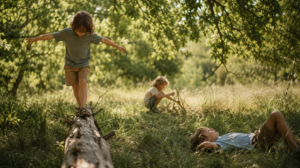
Think about the summers you remember from your own childhood. Chances are, the memories that stick are not from structured programs. They are from the slow, strange, unplanned hours. The afternoon your kid invented a game with sticks and a bucket. The week they got obsessed with bugs. The conversation that happened because there was nothing else going on.
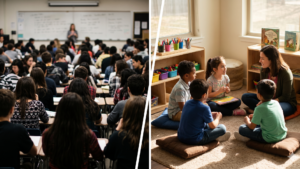
When every hour of summer break is scheduled, children lose the opportunity to practice being the author of their own time. They get very good at following directions and very little practice figuring out what they actually want to do. That gap shows up in school. It shows up in relationships. It shows up in how they handle moments when life doesn’t have a clear next step.
Overscheduling isn’t a parenting failure. It comes from a genuine place of wanting the best for your child. But wanting the best sometimes means resisting the pressure to optimize every season of their childhood.
What a Different Kind of Summer Can Look Like
None of this means summer should be empty. It means summer should have room in it.
A few weeks of camp or structured activity can coexist with long stretches of unscheduled afternoons. A family trip can sit alongside weeks at home with no particular agenda. The goal isn’t to eliminate plans. It’s to stop treating every gap in the calendar as a problem to solve.
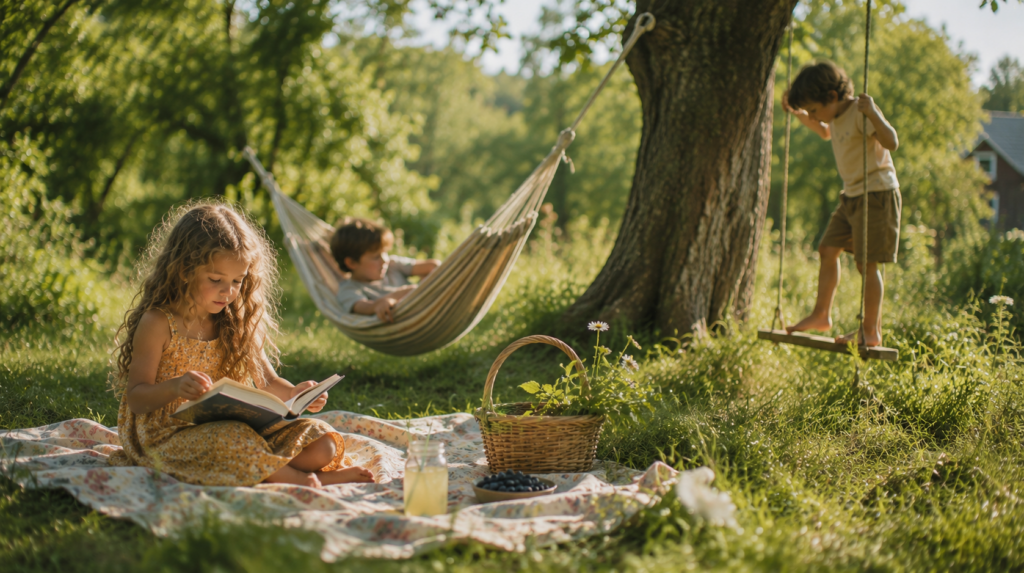
Some of the most meaningful summer break activities for kids cost nothing and require no registration deadline. A library card. A backyard. Permission to be bored until something interesting happens.
At Discovery School of Innovation, inquiry-based learning is the foundation of everything we do. Children are not passive recipients of information. They are curious, capable people who learn best when they are driving the questions. That philosophy doesn’t take summers off. It just looks different when school is out.
The Best Investment You Can Make This Summer
Before you finalize the fall schedule, consider leaving some of summer intentionally unfinished. Not because you’re unprepared, but because you understand something important about how children grow.
The kids who thrive in school are often not the ones with the most structured summers. They are the ones who had enough room to get a little bored, figure something out, and discover what it feels like to be genuinely interested in something.
That is the kind of learning that lasts.
If you’re thinking about where your child will grow this fall, Discovery School of Innovation’s 2026-2027 enrollment is open. Our brand-new six-acre campus in Magnolia opens in August, bringing inquiry-based learning, small class sizes, and a Reggio Emilia-inspired Pre-K4 program to the greater Houston area. Schedule a tour at discoverysi.org and come see what a school built around curiosity looks like in action.