Research shows that waiting to address learning struggles has a compounding cost. Here’s what every parent should know, and what you can do about it today.
If your child starts their education with a strong foundation, they will succeed. If they stumble early but receive the right support quickly, they’ll continue to thrive. The research on this is unambiguous.
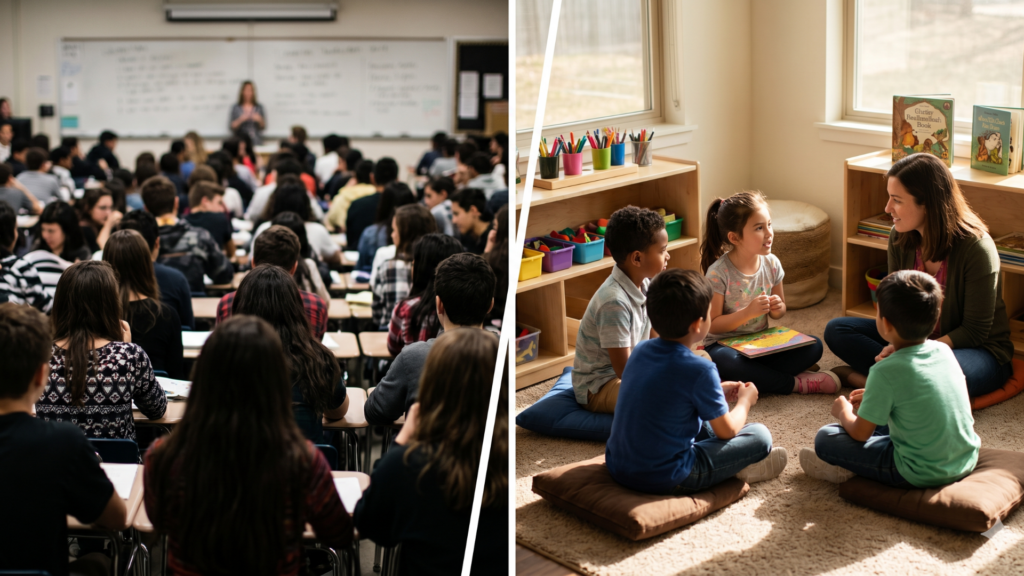
But here’s the part that keeps educators and parents up at night: sometimes kids who are struggling fall through the cracks. In classrooms of 25 to 27 students, often more, with a teacher who may be overwhelmed with classroom management tasks and may not identify these needs early, learning gaps quietly widen. By the time anyone notices, the window for quick, effective intervention has narrowed dramatically.
It takes four times longer to intervene in 4th grade than it does in late kindergarten.
That statistic should stop every parent in their tracks. It doesn’t mean 4th-grade intervention is impossible. It means the effort, time, and resources required multiply significantly when a child’s struggles go unaddressed through the early years.
This Isn’t Just About Dyslexia
You may have seen the statistic above circulating in conversations about dyslexia, and rightly so, since dyslexia affects roughly 1 in 5 students. But the principle applies far more broadly. Children struggle for many different reasons: processing differences, attention challenges, anxiety, language gaps, giftedness that goes unrecognized, or simply a mismatch between how they learn and how their classroom operates.
The common thread isn’t a specific diagnosis. It’s timing. When a child’s needs are identified early and addressed with precision, outcomes improve across the board, regardless of what’s driving the struggle.
That finding underscores the cascading nature of early struggles. Third grade marks the shift from “learning to read” to “reading to learn.” Students who haven’t built a solid foundation by that point face an uphill climb in every subject that follows.
Why Do So Many Kids Fall Through the Cracks?
It’s rarely because teachers don’t care. Most teachers are working incredibly hard. The problem is structural.
In a classroom of 25 or more students, a teacher simply cannot observe every child closely enough to catch the subtle early signs of a learning struggle: the slight hesitation before reading aloud, the creative avoidance strategies, the slow erosion of confidence that a child hides remarkably well. These are signals that a trained educator in a smaller setting would notice in a week. In a crowded classroom, they can go undetected for a year or more.
And even when a teacher does recognize the need, public school intervention systems often involve long referral processes, waiting lists, and limited specialist availability. The gap between noticing a problem and delivering targeted support can stretch for months.
What Does Effective Early Intervention Actually Look Like?
Effective intervention isn’t about pulling a child out of class for generic tutoring. Research consistently points to several key elements: small group sizes that allow instruction to be tailored to each child’s specific needs, certified teachers who are trained to identify learning differences early and build action plans, consistent and structured support embedded into the school day rather than bolted on as an afterthought, and equally important, challenge and enrichment for students who are excelling so every child is learning at their edge.
This last point is critical and often overlooked. Early intervention isn’t only about supporting students who are behind. It’s about ensuring that every child, including those who are ahead, is being met where they are and pushed to grow. A classroom that only teaches to the middle serves no one well.
The Environment Makes the Difference
When student-teacher ratios are small enough for teachers to truly know every student, something powerful happens. Struggles are caught in days, not semesters. Instruction adapts in real time. And children develop the confidence that comes from being genuinely seen.
This is the environment we’ve built at Discovery School of Innovation. With intentionally low student-teacher ratios, certified teachers trained in identifying learning differences, including dyslexia-specific certification, and a curriculum designed to personalize learning, we address the full spectrum of student needs. We support children who are struggling. And we challenge children who are soaring.
Because both matter. Both deserve attention. And both require a school built for it.
What Parents Tell Us Most Often
Families typically come to us because something isn’t working. Their child is capable, curious, and motivated, but their current school environment feels crowded, rigid, unchallenging, or disconnected. They’re looking for a place where their child won’t slip through the cracks. Where teachers notice the small things. Where learning is personal, not one-size-fits-all.
If that sounds familiar, you’re not alone. And you don’t have to wait to find out how a different kind of school could change your child’s experience.
See the Difference for Yourself
Schedule a tour and discover how Discovery School of Innovation meets every child where they are.
Schedule Your Tour Today